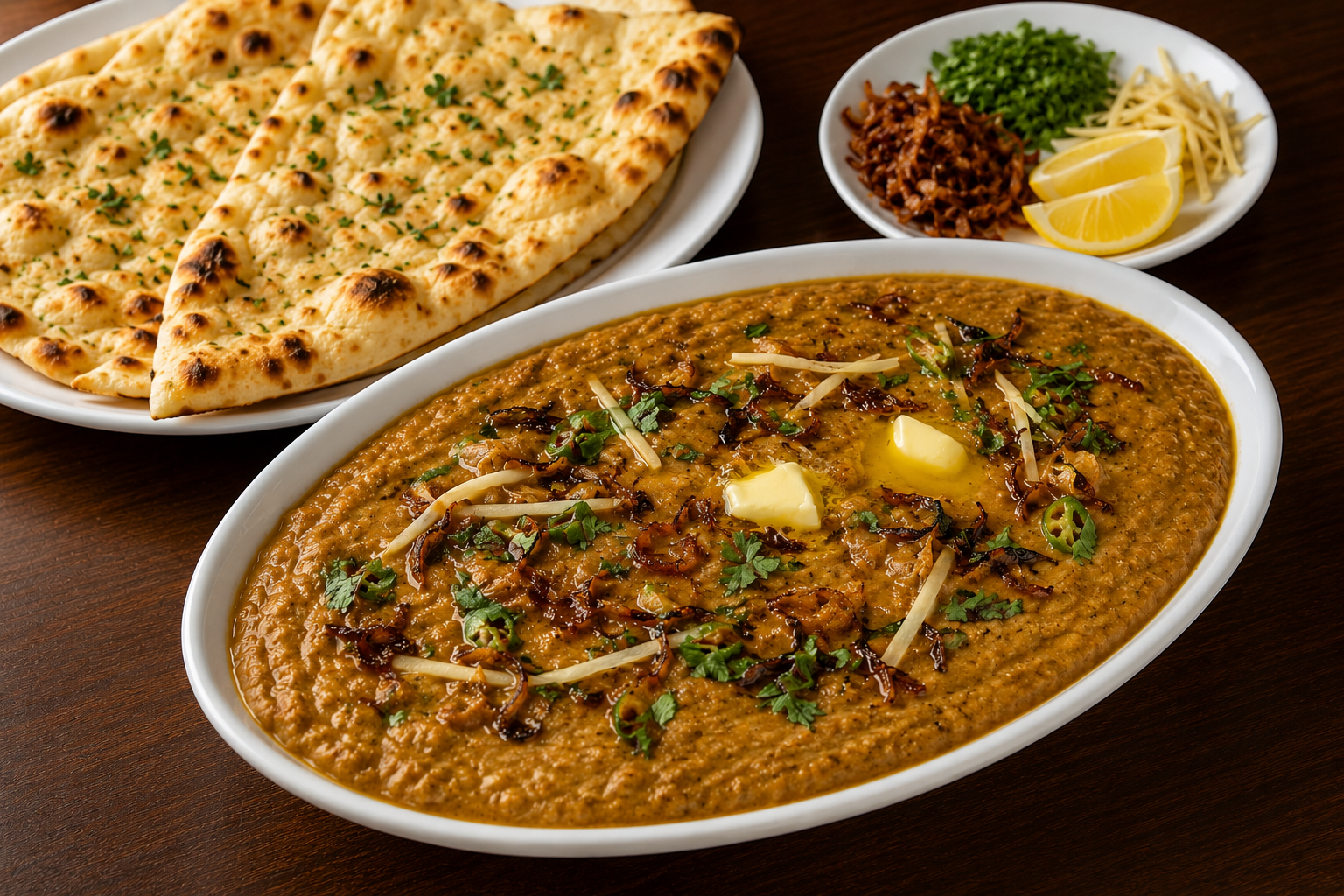
Beef Haleem – A Wholesome, Nourishing & Surprisingly Balanced Meal
When you think of comfort food, few dishes come close to the richness and depth of Beef Haleem. But beyond its delicious taste and traditional roots, Haleem is actually one of the most nutritionally complete meals you can enjoy—especially when prepared thoughtfully at home.
The History of Beef Haleem
Beef Haleem is a rich, hearty dish with deep roots in the culinary traditions of the Middle East and South Asia. Known for its slow-cooked blend of meat, lentils, wheat, and aromatic spices, haleem has evolved over centuries into one of the most beloved comfort foods in Pakistan.
The origins of haleem can be traced back to the ancient Middle Eastern dish known as Harees, a simple mixture of wheat and meat cooked slowly until it reached a porridge-like consistency. Harees was popular throughout the Arabian Peninsula and neighboring regions and was often prepared during religious gatherings and special occasions.
As trade, migration, and cultural exchange flourished, the dish traveled to the Indian subcontinent during the medieval period, particularly under the influence of Muslim rulers and traders. Over time, local cooks adapted the recipe by incorporating a variety of lentils, spices, and cooking techniques that reflected the rich culinary traditions of the region.
During the era of the Mughal Empire, haleem gained popularity in royal kitchens and among the general population. The Mughals were known for introducing sophisticated cooking methods and aromatic spice blends, which helped transform the simple wheat-and-meat dish into the flavorful haleem enjoyed today.
In Pakistan, beef became one of the most common meats used in haleem due to its rich flavor and affordability for large-batch cooking. The dish is traditionally simmered for several hours, allowing the beef, wheat, lentils, and spices to break down into a smooth, creamy texture. The slow cooking process creates the signature taste and consistency that make haleem unique.
Modern versions of Beef Haleem vary across different regions of Pakistan, with each family often adding its own blend of spices and garnishes. Traditional toppings include fried onions, fresh ginger, green chilies, lemon wedges, and chopped cilantro, adding layers of flavor and texture to the dish.
More than just a meal, Beef Haleem represents hospitality, patience, and the joy of sharing food with loved ones. Its centuries-old journey from the Middle East to South Asia reflects the cultural connections that have shaped Pakistani cuisine and contributed to its rich culinary heritage.
What Makes Haleem a “Complete Meal”?
Beef Haleem is a unique combination of:
- Whole grains (wheat, barley, lentils)
- Protein-rich beef
- Healthy spices
- Slow cooking process
This creates a dish that includes:
- Protein (for muscle repair and satiety)
- Complex carbohydrates (for sustained energy)
- Fiber (for digestion and fullness)
- Healthy fats (depending on preparation)
Unlike many single-focus meals, Haleem naturally covers multiple food groups in one bowl.
Let’s look at Haleem from a modern perspective: not just as a festive dish, but as a balanced, satisfying, and even weight-conscious option.
Beef Haleem – A Wholesome, Nourishing & Surprisingly Balanced Meal
Equipment
- Dutch Oven (or Heavy-Bottom Pot) A heavy-bottom Dutch oven is ideal for making Haleem because it distributes heat evenly and allows the meat, lentils, and wheat to slowly cook together into a rich, creamy texture without sticking.
Ingredients
Grains & Lentils (Soaked 6–8 hours):
- ½ cup wheat broken wheat / daleeya
- 2 tbsp barley
- 2 tbsp rice
- ½ cup chana dal
- ¼ cup masoor dal red lentils
- ¼ cup moong dal
- ¼ cup urad dal
Meat:
- 1 kg 1kg beef boneless preferred
Spices:
- 1 large onion sliced
- 1 tbsp ginger paste
- 1 tbsp garlic paste
- 1 tsp turmeric powder
- 1 –1.5 tbsp red chili powder
- 1 tbsp coriander powder
- 1 tsp cumin powder
- Salt to taste
- 4 –5 whole black peppercorns
- 2 –3 cloves
- 2 green cardamoms
- 1 small cinnamon stick
Other:
- ½ cup oil or ghee
- 2 tbsp plain yogurt
Instructions
Cook the Grains & Lentils
- Add all soaked grains + lentils to a pot.
- Add 4–5 cups water.
- Cook until everything is very soft and mushy.
- Blend lightly (optional) for smoother texture.
Cook the Meat
- In another pot, heat oil and fry onions until golden brown.
- Add ginger-garlic paste → sauté.
- Add meat + all spices + yogurt.
- Cook until meat is tender (add water if needed).
Combine & Mash
- Add cooked lentil mixture into the meat.
- Mix well and cook on low heat.
- Use a wooden spoon or hand blender to mash/shred everything together.
- Keep stirring (important!) for 20–30 minutes until thick and creamy.
Final Tadka (Optional)
- Heat ghee, add cumin seeds & fried onions.
- Pour over haleem.
Garnish (Must for authentic taste!)
- Fried onions
- Fresh coriander
- Mint leaves
- Green chilies
- Lemon wedges
- Ginger juliennes